Reflection Blogging – Hyperlinked Environments
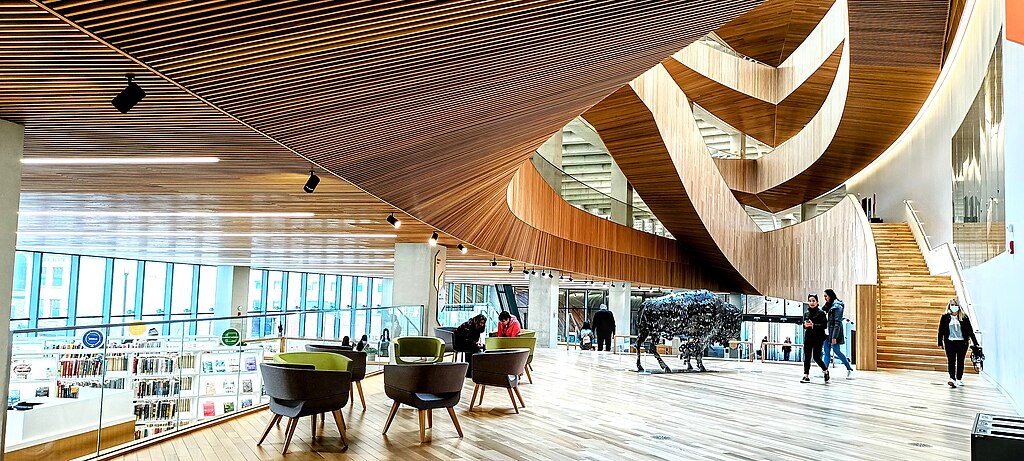
Winston Churchill once said “We shape our buildings; thereafter, they shape us.” This is of course true for library buildings, but it is probably also true for the services that libraries provide. It is hard to get out of the fixed mindset of “just doing things the way they have always been done” and to a mindset focused on opportunity, possibility and change. If libraries will remain relevant in the 21st century they must support, inspire and encourage the people of today, not the people of the past.
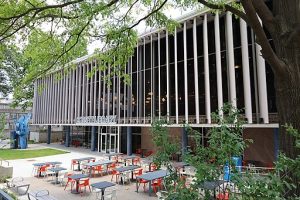
The story of the Memphis Public Library from Smithsonian Magazine was incredibly inspiring, and it is probably not entirely a coincidence that the director of the library system was not a librarian by training. She was able to see with fresh eyes the structures and services that the library offered. Even though she faced pushback for not being an accredited librarian, she sought out people in the library world who were innovators and “rock stars” and went on a learning tour to see what was possible in libraries around the country. It probably helped her that she could not think of all the reasons “those things wouldn’t work” back in her own library system, and because of that she made change in the Memphis Public Library system in powerful ways. The story of the Media Creation and Teen Space Cloud901 and the young boy Tim Felix using its services perfectly captured the power of libraries and how the learning and opportunities that they provide can be a lifeline for community members (20. Without family and much local support he found a mentor and learning opportunities through music at the library that are shaping his present and future.

The Four-Space Model from the University of Copenhagen is also a great way to conceptualize how libraries can and should be thinking about space in the modern environment. In the model, the library provides space for Inspiration, Learning, Meeting and Performance. The spaces can overlap, but they can also be separate. Spokane Library’s “The Hive” represents this mindset perfectly as it is a space for performance, arts education, meeting and performance. It is only four miles from the Main library in Spokane, but it serves users differently than the main library and proudly boasts no books and computers in the space. It isn’t a branch of the library as much as a separate space to support the arts, creativity and learning in the community.
I’m inspired by all these library examples and models. I mentioned in my last post about a library being more than a collection of books, and I’m afraid the library I currently work in is stuck in that mentality. Hopefully I can find ways to challenge our director to think differently in our planning and services as we start a new year.
Grant, R. (2021). How Memphis Created the Nation’s Most Innovative Public Library. Smithsonian, 52(7).
Skot-Hansen, D. (2017) 4 Spaces Model from Univ Copenhagen University of Copenhagen.
Spokane Public Library. (2025, October 15). The Hive – Spokane Public Library. https://www.spokanelibrary.org/hive/

You May Also Like
Reflection Blogging – The Power of Stories

Reflection Blogging – New Horizons