From Easy Access to Express: Imagining Springtown’s Next Chapter: New Models Reflection
I couldn’t help but feel a great deal of pride, along with a heavy dose of envy, when reading about Mesa Public Library’s small, fully self-service Express Library. Pride in the fact that our own Springtown branch library was a very early adopter of some of the same ideologies and automated technologies likely seen in early iterations of the Express Library, and envy, of course, in the fact that Mesa Public has been able to secure the resources necessary to make the Express Library such an enviable model for self-service – using technology, thoughtful planning, and a strong understanding of community habits and trends to create a welcoming and convenient library experience.
Livermore Library took an important step toward a very similar self-service model more than a decade ago. When budget reductions threatened to close the Springtown Branch, the surrounding community strongly opposed losing the small but mighty branch in their neighborhood. In response, library stakeholders began development on what would become Springtown’s Easy Access Library, a hybrid service model that combined limited staffed hours with self-service access. Staff surveyed Springtown residents, identified the services they valued most, and installed technology that allowed patrons to pick up requested materials, browse and check out books and DVDs, and return items (Public CEO, 2016).
Here’s a video from the way back machine touting the cutting edge technology featured in the Easy Access branch:
I see the Easy Access Library as a strong first step toward the more fully developed model described in the Mesa article. Livermore has already demonstrated a willingness to look beyond traditional library operations to meet the community’s needs and the creativity needed to implement untested (at the time) self-service solutions with a high degree of success. Using Mesa Public’s Express Library as a model for a new iteration of Easy Access, Springtown could evolve into a more complete self-service experience.
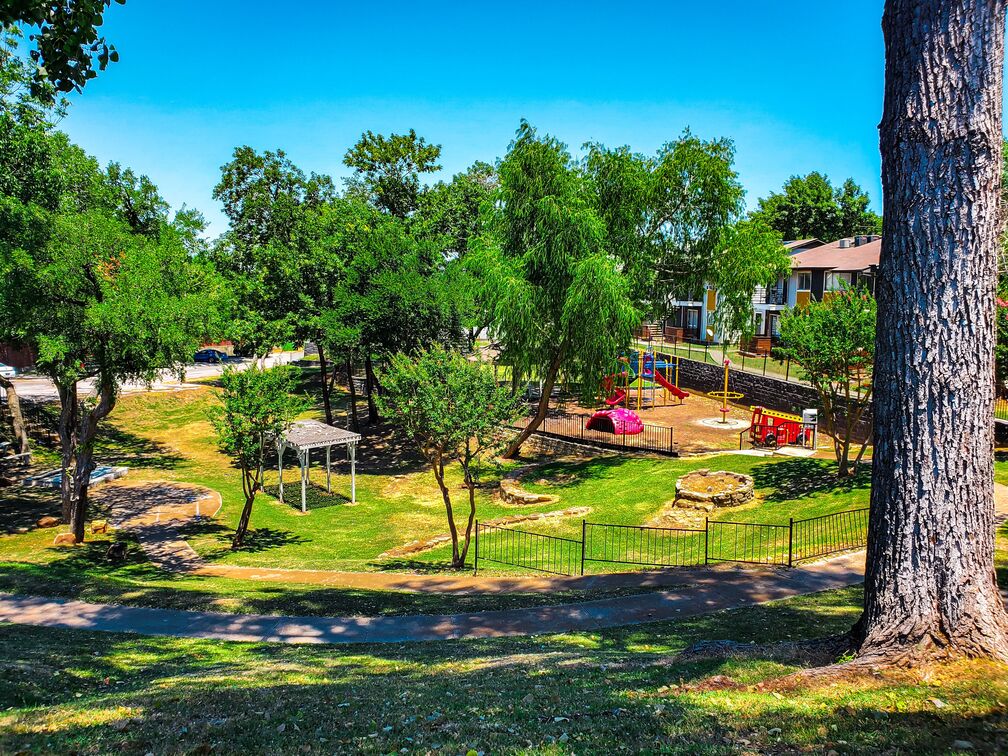
I shared in my last post the development of the new Springtown Community Park (pictured below) scheduled to open in early Fall 2026. The 6.8-acre park is being constructed next to the library and will include playground equipment, shaded gathering spaces, an outdoor game area with table tennis tables, chess tables, and corn hole, a community garden, bicycle and pedestrian paths, and connections to an 18-hole disc golf course. This upscaled park will undoubtedly bring more people into the area and create new opportunities for the library to connect with residents in the area – many of which may have never visited the Springtown branch due to its very limited Tuesday & Thursday hours. Serving as a hub supporting the park’s operations with free Wi-Fi, robust outdoor programming, and Library of Things equipment and learning materials connected to recreation or gardening, the library could make itself indispensable as a chief facilitator of this new community hub.
My reaction to the Mesa story is hopeful. It shows that a small library does not have to offer small possibilities. Springtown already has the foundation. The next step is to recognize the library and park as parts of one shared community space and invest in a vision that brings them together.
References
Public CEO. (2016, September 6). Livermore library develops innovative service model to continue providing accessibility to services. https://www.publicceo.com/2016/09/livermore-library-develops-innovative-service-model-to-continue-providing-accessibility-to-services/
Stamm, L. (2024, May 22). In Mesa, a library with no staff – and no shortage of visitors. Bibliotheca. https://www.bibliotheca.com/library-story-mesa-express/

