Module 10: The Power of Stories
Stories play a powerful role in building connections with the community through deeper understanding in the cultures and experiences of neighbors, workers, students, and other patrons. Stephens (2020) explains how surveys help capture the overall picture using quantitative data, but narrative inquiry (NI) provides first-hand insight on specific stories from patrons. Learning about the personal journeys and common themes can reveal unexpected details about the community (Stephens, 2020). Many libraries extend the power of stories to patrons, providing them the opportunity to learn about others’ experiences with initiatives like ‘The Human Library.’ Readers can ‘checkout’ volunteers with specific personal experiences or perspectives, meaning they can engage in one-on-one conversations with them and ask about their lives, seek advice, and learn more about their perspectives (Wentz, 2013).
In the realm of the arts, public libraries have opportunities to learn and amplify the stories of local artists through initiatives like artmaking clubs and workshops; artist-in-residence programs; and exhibitions. These expand the avenues of connections and conversations between artists, librarians, and community members. By learning the works and processes of the artists in their neighborhood, patrons and librarians also gain a deeper understanding of visual literacy, how art can bring a viewer to another perspective or way of life.
Artmaking Clubs & Workshops
Clubs and workshops offer patrons the opportunity to experiment and play through artmaking, and they typically foster a welcoming environment for conversation, connecting patrons with each other and librarians. In these programs, librarians can learn about the patrons they serve, learning more about their interests and needs.

Los Angeles Public Library – Los Angeles, CA
The Los Angeles Public Library hosts a weekly Thursday Art and Fiber Circle where patrons can “bring [their] project, enjoy tea, and connect with others in a relaxed, friendly space” (Los Angeles Public Library, n.d.). These intimate, cozy gatherings welcome conversation and sharing stories, akin to the concept of hygge, celebrating the everyday with community (Stephens, 2019).
Artist-in-Residence Programs
In my Assignment X blog post, artist-in-residence programs were referenced as an approach to support artists, providing accessible opportunities to create and connect with the community. Alongside artmaking, artists are often expected to lead workshops or events during the program to exchange discussion on process. While artists share their stories visually and verbally in this program, they also learn the stories of patrons and local residents by inviting them to partake in the act of creating art as well.
Verona Public Library – Verona, NJ
Verona Public Library demonstrates how to build conversations between artists and the Verona area community through open artmaking in the main area of the library. During the artists-in-residence’s studio hours, library patrons are allowed to “observe art in the making and give the artist an opportunity to share information about their inspiration, materials, and process” (Verona Public Library, n.d.). Furthermore, artists are expected to plan and host at least three public events/activities, encouraging education and engagement with the community (Verona Public Library, n.d.).
Exhibitions
Exhibitions are both a way for artists to showcase their work, and a visual conversation with viewers. Patrons can learn about the personal experiences of local artists by directly engaging with their work, attending artist talks, and reflecting on their perspective/process.
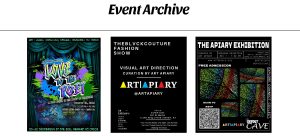
Art Apiary – Newark, NJ
This space offers emerging and local artists accessible opportunities to connect with their community “through exhibitions, live performances, artist development, and community-centered programming” (Art Apiary, n.d.). Their exhibitions provide artists a bridge to their community, with works that visually communicate their interests and process. Art Apiary was created after a growing need for art spaces in Newark.
Public libraries can see all these opportunities as a point to connect with local artists and learn about the art scene and what they need, whether it be supplies, professional development, connections, or simply a space to create.
References
Art Apiary (n.d.). About us. https://www.artapiary.org/about-us
Los Angeles Public Library (n.d.). The Thursday Art and Fiber Circle [event posting]. https://www.lapl.org/events/thursday-art-and-fiber-circle
Stephens, M. (2019). Hygge state of mind, in Wholehearted librarianship. American Library Association.
Stephens, M. (2020, April 9). Office hours: Narrative inquiry [Blog post]. Tame the Web. https://tametheweb.com/2020/04/09/office-hours-narrative-inquiry/
Verona Public Library (n.d.). Artist-in-Residence: About. https://www.veronapubliclibrary.org/artist-residence-about
Wentz, E. (2013, April 26). The human library” Sharing the community with itself. Public Libraries Online. https://publiclibrariesonline.org/2013/04/human_librar/
One response to “The Power of Stories: Artmaking as Storytelling”
I enjoyed your discussion of how artmaking can serve as another form of storytelling in libraries. I am an avid lover of art and creator of art myself, so I think art clubs, artist-in-residence programs, and exhibitions are super cool. They can create opportunities for patrons to express themselves, learn about others, and build meaningful connections through creativity. I especially liked your point that these programs also help librarians better understand the interests and needs of their communities. By supporting local artists and providing welcoming spaces for conversation, libraries can make community stories more visible and valued and also support art!