Community Connection in Libraries

Month: November 2025

Infinite Learning- Library as Classroom: Homeschool and the Library

As Stephens (2025) mentions in his Library as Classroom lecture, “libraries create and facilitate connections”. This is especially true when we think of the ways libraries have transformed their programming to fit the learning needs of their communities. In person and online learning opportunities have become the norm in libraries everywhere, as librarians step into roles as curators of the learning experience (Stephens, 2016). With community-driven course opportunities, libraries have stepped in to augment learning and have solidified themselves as part of the classroom experience. This is evident in the many educational programs in public libraries, as well as the development of online courses. The library has become a classroom and a place to learn from anywhere and everywhere.

When I think of the library as a classroom, my own experiences as a homeschooling parent come to mind. In the homeschool community, the library is an invaluable resource for enrichment, socializing, and supplementing education. In thinking of the future of teaching and learning, Lippincott (2015) discusses “active learning and learning as a social process” in terms of library collaboration with higher education institutes. This is something that particularly resonates with the homeschool community, as well. With a steadily growing homeschool population in the United States, libraries are well-positioned to provide active learning and teaching resources to homeschoolers, and many are already taking on this challenge.
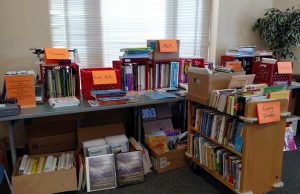
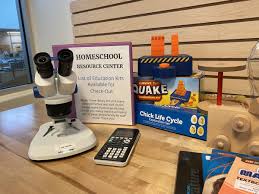
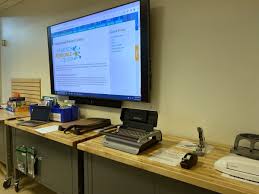
At San Diego Public Library (SDPL) in California, they have developed a homeschool resource center to help home-based learners and their teaching parents. Johnsburg Public Library in Illinois has also developed a homeschool resource center. Both libraries provide curriculum materials and educational manipulatives available for check out, commonly needed office supplies and machines like laminators and copiers, as well as social and learning opportunities for homeschool families through clubs, classes, and more. The centers are designed as a large classroom, and are available to reserve for homeschool co-op meetings, programs, and more.  These centers are open to anyone, not just homeschool families, but are designed to enrich the lives of home-based learners and educators. Johnsburg Library goes above and beyond, offering one-on-one meetings with the library’s educational consultant, provides information to local homeschool co-ops and groups, and breaks-down education and teaching philosophies for families. This high level of dedication to providing resources to library goers, and more specifically to homeschoolers, shows the depth of the ways libraries are adapting to the educational needs of their communities. With so many learning and social opportunities provided, libraries are an infinite learning resource for homeschoolers.
Recently, libraries have also ramped up their digital resources and online classes. This is useful to all library users, of course, but is yet another tool that really helps in home-based learning. Seattle Public Library (SPL) provides online access to a wealth of courses for all ages. From adult tutoring to online curriculum resources, SPL has taken the concept of library as a classroom to the next level! SDPL also hosts many online learning opportunities and has organized these resources by grade level and subject in the homeschool resource center section of their site, with Johnsburg Library also hosting a specific area of their site for online homeschool resources.

In the most literal sense, the library is what homeschoolers look to as their classroom. Homeschoolers are always in search of enrichment opportunities for their children that have the added benefit of socializing or a learning experience. The library is often used to achieve all these things wrapped into one. Libraries have come a long way in their work to serve their communities as educators, and the ways they benefit homeschoolers are virtually endless. Libraries and librarians are partners in teaching our communities and the possibilities in these endeavors are endless—they are wholly and truly “spaces of infinite learning” (Stephens, 2014).

References:

Lippincott, J. (2015). The future for teaching and learning. American Libraries. https://americanlibrariesmagazine.org/2015/02/26/the-future-for-teaching-and-learning/

 Stephens, M. (2014). YLibrary?: Making the case for the library as space for infinite learning.

Stephens, M. (2016). The heart of librarianship: Attentive, positive, and purposeful change. ALA Editions.

Stephens, M. (2025). Library as classroom. [Video] Panopto recording. https://sjsu-ischool.hosted.panopto.com/Panopto/Pages/Viewer.aspx?id=c716d09f-f8cf-4a08-bef8-af34011f855e

The Power of Stories: Keeping, Sharing, and Making Stories

There is nothing quite as unique or powerful as our personal stories. These stories shape not only who we are, but the environment around us. When we step into professional roles, our unique personal stories follow us into these roles and shape the institutions we become a part of. When we hold space for these stories, powerful movements arise.

In library service, the value of personal stories shows itself in a variety of ways. Diverse staffs and communities shape the way these stories play out in library services.  Through inclusive collections that tell the stories of the communities we represent, in planning programs and services that reflect this, and in a staff that mirrors the diversity of the community, libraries show how the power of stories moves us.

Perhaps one of the greatest tools in growing community is learning about those around us. Coming to know these stories through “The Human Library” project is a great example of the ways libraries invest in the power of stories. In this project, libraries create the opportunity for community growth and intentional exchange of ideas by curating a group of diverse individuals as “books” available for “rental” (Wentz, 2013).  When “readers” check out their human “book” to learn their story and ask questions, magical things happen—acknowledgment and reflection of internalized biases, open and continued dialogue, and further growth of the human library project through the passion gained for sharing these experiences (Human Library, 2021). When we have the opportunity to learn the unique narratives of the people around us, we gain understanding; and with this understanding, we become empowered participants of our communities who are equipped with knowledge of the interconnectedness of our stories and more capable of empathizing with the people around us.


The Human Library shows us just one of the many creative and innovative ways libraries are shaping their communities through the power of stories. Libraries everywhere are ramping up their inclusivity practices by diversifying their collections to represent people of all kinds. This, of course, comes in the form of books but also in many other imaginative ways. Through oral histories projects, libraries everywhere are gathering collections of oral history from members of the community, giving people the ability to share their stories with the public. Los Angeles Public Library hosts a remote oral history platform called Their.Story, helping the community “collect, preserve, and engage with audiovisual stories of their members” (LAPL, n.d.). On the site, anyone can record their story of the impact libraries have had on their lives. Other oral history collections tell stories specific to important figures or groups of people, giving us the ability to see into the personal lives of others.

StoryWalks are another way libraries are incorporating inclusive narratives into their services. The Magnolia Neighborhood branch of Seattle Public Library has hosted a StoryWalk of Indigenous stories for five years. On an outdoor trail near the Daybreak Star Indian Cultural Center, a story is arranged on sign posts for visitors to read along their walk. Thesestories, written by native authors, share the history and culture of Indigenous communities with the public through a fun and engaging participatory event.

By sharing our stories, listening to the stories of others, and collecting and cataloguing stories to be preserved and shared with the public, libraries are doing the important work of engaging the community in meaningful reflection and learning about the people around us. Strength is found in our communities when we share the power of stories.

References:

Arne-Skidmore, E. (2021, April 8). Human library impact study. The Human Library. https://humanlibrary.org/new-study-on-the-impact-of-the-human-library/

LAPL. (n.d.). Their.Story. Los Angeles Public Library. https://www.lapl.org/theirstory

Stephens, M. (2019). Wholehearted librarianship.  ALA Editions.

 Wentz, E. (2013, April 26). The human library: Sharing the community with itself. Public libraries online. https://publiclibrariesonline.org/2013/04/human_librar/

New Horizons: TikTok as Library Outreach

              When discussing shifts in library service, it is important to mention the ways library outreach is transforming. Social media has long been part of library outreach, but in recent years, this has taken new form. With the rise of TikTok, libraries around the world have begun to participate in a refreshed, and even more trendy, social media landscape. As the IFLA Trend Report of 2024 explains, young adults prefer to use social media for receiving their news and other important information. This is something that, in recent years, libraries have caught onto and have begun to use to their advantage. Through short-form video content, libraries can create online engagement with their communities and even those outside of their communities.

          This form of digital outreach has far surpassed the usefulness of its social media predecessors. TikTok has become a go-to space to receive information, and short-form video content is transforming the information landscape. With this transformation in the way we search for and receive information, libraries have found their niche. This social media tool has already proven its usefulness to library outreach and engagement, with many public libraries gaining follower counts in the tens and hundreds of thousands.

          Creating cult-like followings through funny videos, or by using their content to inform about library services and programs, libraries and librarians are using TikTok to grow support and engagement. Librarians like Mychal Threets (@mychal3ts on TikTok) have become viral sensations, gaining large followings and, thus, the ability to bring awareness to library services and issues related to libraries to their audience. Furthermore, TikTok users have popularized their local libraries by visiting, creating videos, and adding to the #library tags.

          The potential for outreach growth through this social media app is tremendous and will continue to be seen for years to come. This, then, posits the question of how libraries may continue to see success through TikTok outreach methods and the future incorporation of short-form digital media in libraries and the information landscape. It is not far-fetched to imagine that libraries may begin to hire content creators and managers for their TikTok accounts, to keep up with this growing asset. Just as there are outreach teams, it is likely we will see a transformation in this area and the rise of social media specialists and content creation teams for libraries.

          In recognizing the transformative stage of the information landscape we are in, libraries are participating in social media trends and revamping interest and community participation, while exposing new audiences to library advocacy efforts. Growing an online following has become a crucial step in the success of many businesses, and libraries, too, have bought into this business plan. In doing so, a new generation of library goers is growing via the virtual community of TikTok.

“I can say without hesitation that our library program would not be as successful, supported or engaging were it not for our robust social media presence. To serve our students, we need to speak their language and we need to live where they live. And right now, a lot of our students are speaking and living TikTok. And so should we.”- Kelsey Bogan, 2020


References:

Bogan, K. (2020). TikTok and libraries: A powerful partnership. Schools catalogue information service, 115(4). https://www.scisdata.com/connections/issue-115/tiktok-and-libraries-a-powerful-partnership/

Dezuanni, M., Osman, K., Burton, A., & Heck, E. (2024). IFLA trend report 2024: Facing the future of information with confidence. https://repository.ifla.org/handle/20.500.14598/3496