Public libraries are adapting to the growing and changing needs of modern library users by reimagining the library environment. The library is no longer simply a place to borrow books; it is a community hub where people come to engage in creative pursuits, socialize, and collaborate. Innovative design and collection materials have become cornerstones of the efforts to modernize and redesign library spaces. Cultivating an environment of community, public libraries have officially “rebranded” (Grant, 2021).
The public library has become an extension of the community it serves, and a place for “community vitalization” (Skot-Hansen et al, 2013). The programs, services, materials, collections, and overall design of the library building have changed to appeal to a sense of community consciousness, creativity, and entrepreneurial skills. In examples like The Hive in Spokane, Washington  or Cloud901 in Memphis, Tennessee,
 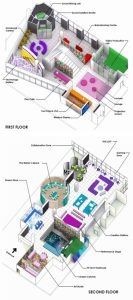 we see wholly reimagined spaces that are dedicated entirely to developing skillsets and artistry through access to the necessary (and often inaccessible) facilities and devices. Here, we see music and photography studios, art and event spaces, sewing rooms, and much more. Makerspaces like these are cropping up in public libraries all around the world, showcasing the innovative modern library environment and its dedication to cultural and community revitalization through creativity, collaboration, and connection.
When thinking of a hyperlinked library, spaces like these are exactly what come to mind. These spaces are fun and engaging for every age– they’re somewhere you want to come hang out, not just go to borrow books. Public libraries have taken the initiative to discover what their community wants and needs and have risen to the occasion in providing access to the necessary materials and equipment to fulfill these. Through the development of Library of Things in many public libraries, we further see this environmental shift away from solely books and into a broader and more fulfilling access initiative that works to serve the needs of the community.
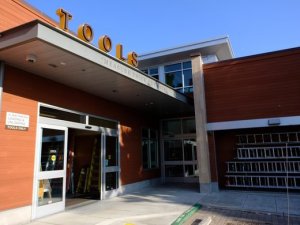
Today’s Tool Lending Library in Berkeley, CA
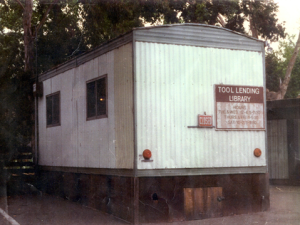
The Tool Lending Library in Berkeley, CA in 2012
It is evident, then, that public libraries have come into a new role. No longer simply buildings filled with books—the public library has been completely reinvented to a meeting space and one of the last remaining, true third spaces of the modern world. While third spaces deteriorate and disappear throughout the U.S., we see libraries stepping into this role by revamping their spaces, programs, services, and materials. From “hushed book repository” to a fun, imaginative space to create, learn, and network—libraries have successfully completed the ultimate rebrand; and have become an environment where community can flourish and grow (Grant, 2021). It is amazing to think of how far public libraries have come, just in the last couple of decades alone!
“The real power of libraries is they can transform people’s lives. But libraries can also be fun”
-Keenon McCloy (Grant, 2021).
References:
Grant, R. (2021). How Memphis created the nation’s most innovative public library. Smithsonian Magazine. https://www.smithsonianmag.com/innovation/memphis-created-nations-innovative-public-library-180978844/
Skot-Hansen, D., Hvenegaard Rasmussen, C., & Jochumsen, H. (2013). The role of public libraries in culture-led urban regeneration. New Library World, 114(1/2), 7–19. https://doi.org/10.1108/03074801311291929