Google Drive Link
Decided to mix the two by podcasting my personal best of in reflections, I will highlight 5 of my blog posts within this podcast.
Transcription here, subtitles are available in the video as well.
Opening and Ending Songs


Google Drive Link
Decided to mix the two by podcasting my personal best of in reflections, I will highlight 5 of my blog posts within this podcast.
Transcription here, subtitles are available in the video as well.
Opening and Ending Songs
I do not have much experience exploring the library but thankfully, volunteering and being able to check out what my library has to offer was fun experience. During this summer, I explored the children’s library programming for my class on children’s programming, it was great to see storytimes and coming up with my own programs. The one that stood out to me as a classroom library experience is the S.T.E.A.M program my library was doing. And it had children from as little as 5 to the oldest to probably 12 years old. This one was based on Scientific Method, and ecology. Exploring the garden and looking for the bugs and animals around the library garden. I was wondering in my childhood, how I could have loved to learn from this experience myself. The kids were being taught by a few librarians on staff. And it was amazing to see their little brains come up with what they see in the garden.
I know several of the libraries around my area have S.T.E.A.M but this is the first of my experience to explore. It’s interesting to look at articles striving for libraries to create learning spaces for themselves.
In the Huffington Post article, while in 2017 the article is made, they made a note that libraries are “antiquated” which made sense for me due to the response I had above about the S.T.E.A.M. learning experience. Even storytimes brings in fun attributes like exercise, musical instruments and finger dance combos. “Go outside and Learn” is the similar experience I had in a S.T.E.A.M class. While the fairy hunt and discover technology caught my eye. Seeing things like 3D Printers being available to create and having makerspaces more and more with library experience. The libraries do not seem antiquated as they used to be. We can explore a lot of things in libraries to create a infinite learning space to help promote all kinds of literacy, not just reading. Which brings in the next article I would love to explore in my last point to make about classroom libraries.
Pablo Merchán Montes via UnSplash+
Digital literacy is an advancing issue arising especially how much in warped speed we are in with technology as of late. In the 8 digital skills article, it addresses the needs of what it means for our society and how streamlined our world of technology is becoming. And this article from 2016 is correct. We are in the age where we are living in the world wide web, while in percentage probably less than 90 percent but we do have a big number of our world connected to the web.
However, we do have an issue with our internet experience and what happened 4 years after 2016, the covid pandemic and lockdown, that made it a more difficult world online. I do think this article does a great point on how we should work on our digital literacy and teach the new generation how to deal with digital identity. I experienced seeing people in the younger generation than me revealing their identities online so easily or showing their homes. I believe an article like this can create a classroom to teach the younger generation what to do. And I do think the old rules of the internet which I still abide by like stranger danger and understanding concepts like to prevent yourself from being hacked which sadly I have been in a case of identity theft. This would be a great source and creative skill to make in a library classroom.
References
Getty Images via UnSplash
I couldn’t help but be interested in the topic this week instead of a wildcard. So, sharing people’s stories: podcasting. That’s interesting topic in my opinion.
I’ll share a little tidbit story of mine, I never was interested in podcasts, and it’s not due to popular opinion (some folks discredit podcasts because I believe it got too popular) But for me, I just prefer music in my car radio, I wouldn’t be a decent driver without music, I guess that’s my ADHD quirk.
So, in my downtime, I do have an interest in podcasts but in a different language. I’m not so fluent but I do love listening to podcasts in Japanese. I love Japanese voice actors, as coined in Japanese “seiyuu”/seiyū/声優. They spark an interest due to my love for anime. Sometimes, they talk about their life stories but in a private matter since some are very private about their home lives. Their podcasts help me try to grasp the language because Japanese media such as Anime or Dramas don’t have a good take of everyday Japanese. I find them typically on YouTube when a translator feels like putting the podcasts/radio out there. Sometimes there is a link on twitter that I find lucky and get access thanks to a VPN.
And some podcasts I do find interesting, for instance like actor ones like Michael Rosenbaum’s, I just only seek out clips of them.
So, in the matter of my attention span, and language interest, that is what sets a precedent for my interest in it.
Nonetheless, seeing podcasts being shared by Michael Stephens, I wanted to reflect on the “Office Hours: With a Little Twist & Power of the Pod” blog post and Eberhart’s article about StoryCorps.
In the article, “Sharing People’s Stories”, it shows the impact that StoryCorps has on the audio storytelling, and how it can be a future for our libraries. Reading that NPR had a Sunday morning edition with Interviews from StoryCorps with people and their family members, it made me think of family who shared stories with me. Like my grandpa at the dinner table telling me that my great-grandma had no teeth and how she loved steak despite it. Seeing how they are sharing resources to empower people to share their stories, giving them a course to teach the basics of creating their own podcast. The library can make it happen, to make your voices thrive. As in the Office Hours by Michael Stephens, one of those voices is a mother of two autistic children and has a “Sensitive Storytime” program for all kids including the ones on the spectrum to participate.
Thus, in the end, my mind is changed a bit on podcasts, while I do prefer listening to music on my car drive (it’s a must, or else my driving wouldn’t be great), I will check out StoryCorps on my downtime due to the matter of Sharing People’s Stories and how the world of podcasts came to be in the library and our community.
References
Eberhart G.M. (2018, February 10). Sharing People’s Stories. American Libraries Magazine. https://americanlibrariesmagazine.org/blogs/the-scoop/sharing-peoples-stories/
Stephens, M. (n.d.). Office hours: with a little twist & power of the pod – INFO 287 – the hyperlinked library. https://287.hyperlib.sjsu.edu/office-hours-with-a-little-twist/
Sara Kurig via UnSplash
Funny fact about me, I don’t think ever experienced virtual reality, it could be my 36 year old memory disintegrating, but I digress. I do have a best friend who used to work in the entertainment industry and experienced it first hand when it was in the beginning stages for the gaming industry, don’t quote me I believe she was experiencing the Playstation VR as it was about to launch in 2016, she told me it was out of this world. She said it was the future and she would love to have it.
While I do love to do VR games in the future. I am curious in the standpoint of how it could contribute with our education and museum visits when we cannot make it. Coming across the Forbes Article brought back memories and not so memories. In fact, this article came back in 2018, two years from my best friend’s experience of the Playstation VR launch. In this article, it is interesting to see someone describe a painting as if it was right in front of them in the first paragraph. I had a thought in my head of what can be an experience of people who can afford it, a not so experience for people in smaller rural communities. And in fact, McShane brought up that point and pointed out there can be such a thing if you make it crude box with your cell phone. And that’s when I remembered, that I experienced!
So, reflecting that, I was thinking “why isn’t virtual reality a thing now?” Is it a trend? I would love to see libraries having these in display for certain places if people could not make it such as in my library, the driving distance to the LACMA is extensive. We can have a day in the library where museums should pair up for the folks at home who cannot make the drive. I experienced the Getty and the Getty Villa. I also went to the Broad and MOCA as well as the usual childhood trips to the Natural History Museum, La Brea Tar Pits and The Children’s Science Center. While the fact that we could get a museum for free in some days locally in L.A, the drive can be too much. We could even get a view from Museums and Art galleys around the world. Some people could benefit either a preview or visiting virtually if they cannot make it, like even I missed out on museums at my time abroad.
I wonder what other educational purposes we can create with VR? I looked into it and children’s games can be educational. There is this site called Adventure Academy, and it has games for the children to learn. I think it is time we could make VR useful like this. Whether it can be a phone in a box, or a VR set that the library can contribute.
References
House, A. (2016, March 16). PlayStation VR launches this October, priced £349.99/€399.99. PlayStation.Blog. https://blog.playstation.com/archive/2016/03/15/playstation-vr-launches-this-october-priced-349-99-399-99/
McShane, M. (2018, June 13). Is virtual reality the future of field trips? Forbes. https://www.forbes.com/sites/mikemcshane/2018/06/13/is-virtual-reality-the-future-of-field-trips/#626ae5d91809
Adventure Academy. (2007). Adventure Academy. https://www.adventureacademy.com/
Expanding Horizons: Language Learning Accessible For All by Anita Garza
10 “Clueless” Storylines That Were Way Ahead Of Their Time by Kacie Lillejord
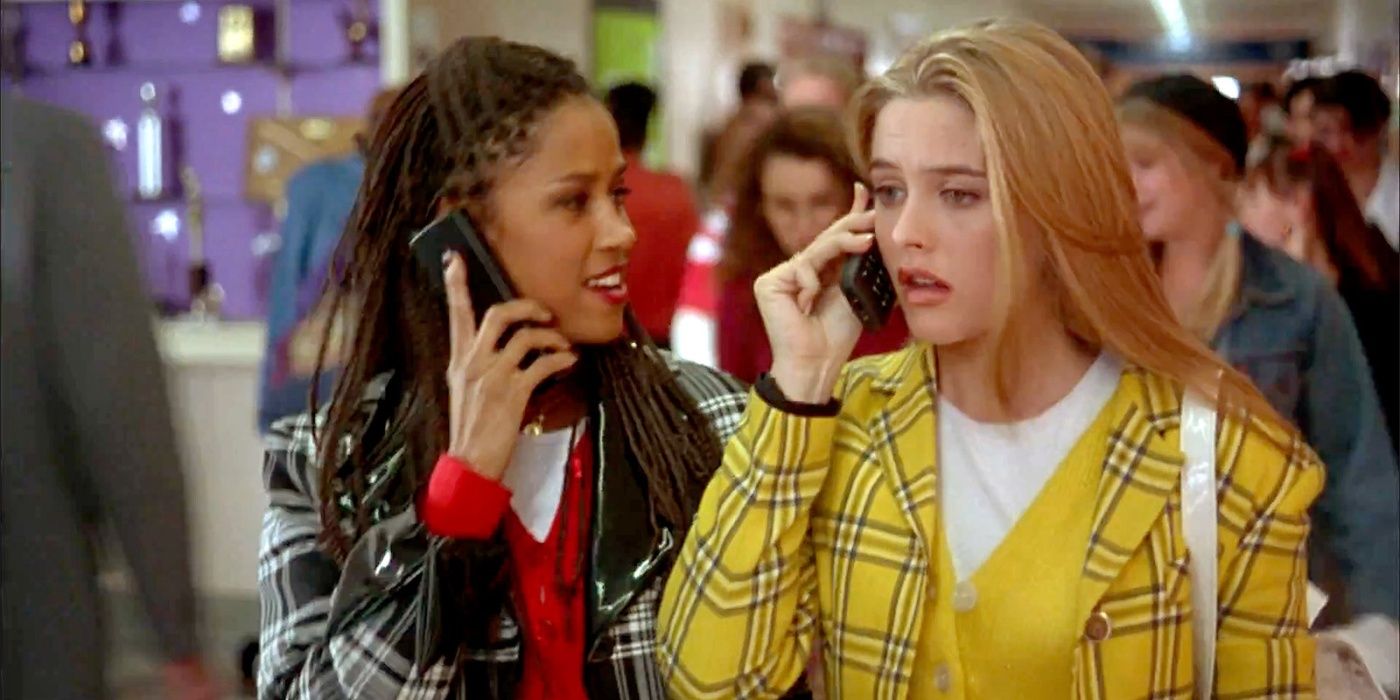
Having a cell phone in the past was considered a luxury, a scene in Clueless where the main character Cher was conversing with her friend Dionne on their grades with their debate teacher, and they met up in the middle of the hallway to continue their conversation. It was for a humor purposes but it was the future we will soon know. Even if this scene is for the young and rich of Beverly Hills at the time. We can do converse on our cell phones in recent times, maybe not in high school now due to restrictions. I recall my time I had a flip phone that was able to text 18 years ago, while 30 years ago, they still had pagers to message and tell each other to call. As the article states, phone usage is more common now with texting and playing games. So, what is it about phone usage for our library services to have an information environment for.
Dhruv vishwakarma via UnSplash
The two articles I want to discuss is how common it is to have a cell phone with today’s standards and how we can economize lending out phones to the ones who don’t have them. First article to discuss is how commonplace cell phones are in the world.
As I pointed out, Cell phones were considered a luxury to have, as well as other technological devices such as computers, laptops and even game consoles. In the article, Laura Silver writes “People in advanced economies are more likely to have mobile phones – smartphones in particular – and are more likely to use the internet and social media than people in emerging economies.” So even if this article is set several years ago, now in recent times, that at least 90% of Americans own a phone according to Pew Research Institute (Gelles-Watnick, 2024). Proving that the U.S. does have 10% of people that don’t own a smartphone.
“Access to technology is a basic human right.”
In the second article, it discusses the homeless populations of Las Vegas, Nevada. Where the library provided a cell phone lending service program for the underserved community. This effort instigated benefactory results towards the people in need. Providing numbers, apps and information for those who want to apply for community efforts, jobs and help for their issues at hand. The reason why the program expanded was due the covid pandemic, where technology started to advance more for services provided online. Thus the funding and costs went towards providing a 18-month lending period for the homeless, giving them a great place to start. Since we are in a country that has 90% of people who own a smartphone, we should consider those who don’t own one, and that is a luxury for them.
Cell phones are our modern world, no one could imagine in the past the extent the power of information in our hands as we do now. Libraries can benefit and make use of having smart phones through having apps, help providing them and so much more.
References
Gelles-Watnick, R. (2024, January 31). Americans’ use of mobile technology and home broadband. Pew Research Center. https://www.pewresearch.org/internet/2024/01/31/americans-use-of-mobile-technology-and-home-broadband/
Lillejord, K. (2020, February 29). 10 “Clueless” storylines that were way ahead of their time. ScreenRant. https://screenrant.com/clueless-storylines-ahead-of-their-time/
Silver, L. (2019, February 5). Smartphone ownership is growing rapidly around the world, but not always equally. Pew Research Center. https://www.pewresearch.org/global/2019/02/05/smartphone-ownership-is-growing-rapidly-around-the-world-but-not-always-equally/
Stephens, M. (2019). The Wholehearted Librarianship: Finding Hope, Inspiration, and Balance. ALA Editions.
“We should consider our users through a lens of compassion
and empathy. What would make their lives easier?” – Michael Stephens
This video resonated with me a lot because I tend to go to the laundromat every few weeks due to a busted machine in my house. I actually love the benefits of a laundromat, and the nostalgia especially my time abroad in my dorm in Tokyo.
My experience is similar to those in the video, the people who do laundry in the laundromats have time on their hands to do things. I always go on my phone and watch a video on youtube or watch an episode of anime that I love to rewatch. Even read a webtoon or two. The amount of minutes that left with during a wash and dry is a lot. It takes me at least two to three hours to get it done. The fact that the librarians without borders in the Bronx consider a great area to provide their services is awesome. They considered it and had it done three years in the making. I believe I seen laundromats become cafes, and the like. To help out the community in need, especially for information needs outside Library facilities and bringing it to the community is very beneficial for our livelihoods. It can also show that libraries are not brick and mortar places that houses books to just read (not that it is a bad thing). It’s a community effort, it will bring the information to you when you need it the most.
“Thus, a bookmobile is both a practical and strategic prioritization of citizens’ nearness to free and equal access to information, education, and cultural activities.”
Another piece of literature has a similarity to the pop-up library for the laundromat, bookmobiles. While the Bronx experience of a pop up is more for reference and providing information needs (unlike providing books to read) The bookmobile carries the books for you to come and read.
Coming across something I have limited experience, but I wanted to look into. Seeing places that have rural villages that don’t have a library is interesting. I honestly expected to be commonplace, I’ve read about bookmobiles before. Even my county library offers a bookmobile in local parks, providing books for all. It started in March of 2001, 24 years of caring out Los Angeles county’s information needs for everyone who can’t just go to the library with their busy schedules. It’s interesting to read how Zealand’s bookmobile runs and the measure of time with literacy rates depending on it. How there is a crisis for literacy despite the provisions given. What more can we do? “The public library as a societal institution is an important response to the reading crisis, but no institution can carry the task alone.” (Lauersen, 2025)
Given what our society reflects, it is up to us to help share what we can do within our technological advancing age. As a literacy/ESL tutor, I share the responsibility for my learner to learn how to read English, where they are fluent in another language. What Lauerson points out is that we should as a community, we need to seek out these resources for our benefit. Just as my learner wants to learn English. Since technology limited our attention spans, it is more easy to lose our literacy rates now. I believe it is beneficial to have a bookmobile for our reading needs, since we have easier access of a cell phone in our hands then it was 20-15 years ago. Bookmobiles should still carry on, maybe provide more interesting provisions, not just books, maybe a tablet with e-books, a laptop for study, and much more. Like the popup, maybe provide the information that could be helpful.
References
LA County Library. (2025, October 16). LA County Library. https://lacountylibrary.org/gateway-bookmobile/
Lauersen, V. a. P. B. C. (2025, February 6). The necessary nearness – an ode to bookmobiles. The Library Lab. https://christianlauersen.net/2025/02/05/the-necessary-nearness-and-ode-to-bookmobiles/
Stephens, M. (2019). The Wholehearted Librarianship: Finding Hope, Inspiration, and Balance ALA Editions.
Bibliothèques Sans Frontières. (2017, October 11). “Wash & Learn” Pop-Up Library program in the Bronx [Video]. YouTube. https://www.youtube.com/watch?v=9HM7pQiqDZY
Users and their knowledge have the ability to reshape library services, but libraries must first
change the way they craft their services and tools so that users have a clear and open avenue on which to communicate and participate. – Michael Casey, Library 2.0, 2007
Michael Casey wrote Library 2.0 and again on a blog post 4 years later about Participatory Service. According to Casey, online tools are made to be available more for us, as well as social media (Casey, 2011). And now about 14 years later after his book and blog post, we have advanced to new highs especially after an a pandemic.
So what is relevant in today’s standards with participation with the current political climate and post-COVID 19 era?
photo by Andrej Lišakov via UnSplash
First, we need to know about participatory culture and why it’s impactful for library services. Participatory culture as defined as is “a culture with relatively low barriers to artistic expression and civic engagement, strong support for creating and sharing one’s creations, and some type of informal mentorship whereby what is known by the most experienced is passed along to novices.” (Hines & Moore, 2016) In short, this is a culture that allows and benefits for the community.
So, what are its impacts, why do we consider participatory service? It is because community affects the library in the present even more so than before, we are in a time where the library is no longer a place of quiet, a place of books and media just being housed. In the mindset of non-patrons, that is the definition of a library. However, it can be a place where many information seekers can come over to gain more than just information.
In regards to what Michael Stephen’s wrote, the library is also a place where community is not just consuming information, the community helps generate new ideas and knowledge (Stephens, 2019). A library with a participatory environment could be one that has a yoga class or for instance, L.A. County Library hosts for their branches, virtual classes for technology. This one instance is teaching powerpoint for intermediate users, ones who do know the application but needs to more experience on the matter (L.A. County Library, 2025). There are multiple ways to have libraries to involve the community. Another aspect is civil engagement which involves political issues. Waimua Public Library in Kalua, Hawaii has a community discussion on Land development (Public Participation: How Libraries Support Civically Engaged Communities | Programming Librarian, 2023).
Photo by Getty Images via UnSplash
As stated above, there are virtual classes for L.A. County Library that are offered to their patrons. Due to the COVID pandemic, the attendance was low numbers especially within the first 3 years. Despite that research indicates that attendance are back to normal with pre-pandemic numbers. However it is different on how each patron make use of the library services. The indication is towards more allowance for space to work in rooms available from the library and its resources “While visits may have decreased, the use of meeting rooms and e-resources has reached a new high.” (Peet, 2024). Due to COVID, libraries adapted to having participatory services online and given circumstances, rooms allowed for social distancing from major crowds. Participatory culture is still around but in different results.
Overall, participatory service is a key element to library services. It allows the community come through with their ideas, give them a light to innovate the library, bringing forth the knowledge we all need. Despite the given circumstances through such unprecedented times like the covid pandemic, the library evolves with the community around it.
If there is no a participatory service in your library, what would you do? Would you take part in providing it? What ideas would you like to see in libraries? It’s interesting to read about which libraries take part and how things are impacted within the library community the past 5 years after the pandemic.
References
Casey, M. (2011). Revisiting participatory culture in trying times. Tame The Web. https://tametheweb.com/2011/10/20/revisiting-participatory-service-in-trying-times-a-ttw-guest-post-by-michael-casey/
Casey, M. E., & Savastinuk, L. C. (2007). Library 2.0: A guide to participatory library service. Medford, N.J: Information Today.
Hines, S. S., & Moore, C. K. (Eds.). (2016). The future of library space. Emerald Publishing Limited.
Microsoft PowerPoint for Intermediate Users. (2025). LA County Library Event. https://visit.lacountylibrary.org/event/14459086
Peet, L. (2024). ULC 2024 Library Insights Report Shows Rebounds from Pandemic, Shifts in User Behavior. Library Journal. https://www.libraryjournal.com/story/ulc-2024-library-insights-report-shows-rebounds-from-pandemic-shifts-in-user-behavior
Public Participation: How libraries support civically engaged communities | Programming Librarian. (2023, July 5). https://programminglibrarian.org/articles/public-participation-how-libraries-support-civically-engaged-communities
Stephens, M. (2016). The Heart of Librarianship. ALA Editions.
Hi everyone,
My name is Anita, I’m from Los Angeles, in the City of Whittier within the county area, east region. I currently am volunteering at the Santa Fe Springs Library in the adult literacy program, I’m working on the ESL modules for tutoring ESL students. I have a 8 year old labrador name Nova, I love anime, manga, reading, films, and recently I have been collecting fanart of my favorite anime, and of course Studio Ghibli which is I’m a huge fan of. I went to the ghibli museum during my abroad trip in Tokyo and hope to go to the park in my next trip. I am excited to join this course to get into the emerging technologies within the MLIS field. I love to be updated on the scope of technology so I’m excited for this course.
I hope everyone has a blast this semester. Thanks for reading!