Reflection on Infinite Learning: Professional Learning Experiences

“BEING ADAPTABLE IN a flat world, knowing how to ‘learn how to learn,’ will be one of the most important assets any worker can have, because job churn will come faster, because innovation will happen faster,”-Thomas Friedman (Stephens, 2016).
Recently I’ve been thinking a lot about how to continue learning even after I graduate. I’ve said before that I want to do many things. Unfortunately, it often feels like I don’t have enough time. I know I have to make the time for myself, but what does that look like? I’ve definitely fallen into the trap of thinking that in order to learn, I need a teacher to instruct me in an academic setting. I’ve been in college for the past 11 years, so it’s hard to imagine anything different. Just the other day I was discussing potentially earning another degree. I don’t want to be perpetually in school though, so I’ve ultimately decided to go back to my roots. When I was a child, I would watch drawing videos on YouTube. I didn’t know any fundamental concepts, but I saw something I liked and worked on emulating it. Education can come from a video, a book, or even other people, and for me, experience is best gained when tackling something head-on.
“Some survey respondents expressed concerns that post-program, everything returned to the status quo in their institutions” (Stephens, 2016).
“As the world changes ever more rapidly, so must our skill sets” (Stephens, 2016).
I’ve been thinking about working in museums and galleries a lot more lately, but I struggle to decide on what role I want to play. I don’t feel qualified enough, but I’m not sure what direction I should lean toward to gain the skills I need. I’ve been considering project management, graphic and product design, coding, and so much more. I started looking more into the Coursera offerings through the school, but I’ve also been browsing YouTube and looking for book recommendations. A few days ago I asked my mom, “Can you just learn something well enough and then put it on your resume without having a degree?” The answer may seem obvious, but it’s not something I ever considered. I assumed my college education would teach me everything I would need to succeed professionally, but it has made increasingly clear that as I grow and mature, learning is a lifelong endeavor. I’m not afraid of this idea; I like learning. I want to continue improving my skills, and I want to master everything I enjoy. I want to walk down a path that allows me to use all of my skills and interests to help others. I want to contribute my efforts in a way that feels unique and authentic to me. I’ve also determined that going forward, I want to be more proactive with meeting and engaging with other people, both in general and professionally.
“Students could also set aside part of their schoolwork time to explore beyond class content. “Follow your curiosity” is my answer when students ask me what emerging ideas and tech they should focus on. This emphasis on learning will carry our graduates forward into their positions” (Stephens, 2016).
“Matteson, Chittock, and Mease (2015) noted that even outside organizational standards, the profession itself has set behavioral standards that librarians are supposed to follow. These include expressing, “positive emotions by showing engagement with customers, greeting people with smiles and eye contact, and communication in a receptive, cordial, and encouraging manner” (p. 85). These standards mean librarianship at its core is a profession deeply connected to emotional labor” (Simon, 2020).
I have always had social anxiety, which I have continuously worked on to improve, but my recent health issues have made things so much more difficult that I’ve basically become someone who sits inside all day. I regret not taking advantage of the many career opportunities that have been presented to me, but I am determined to heal and be more proactive. After graduation, I want to take advantage of the different services available to alumni. Professional connections can be helpful for getting a job, but I’ve also realized that I don’t want to just get a job. This class gave me an opportunity to sit down and really explore how I would implement some of my ideas, and reading others’ comments has instilled a confidence in me that my ideas aren’t silly. They resonate with others, and to me that says they have merit, even if they aren’t perfect. I want to make changes that allow me to focus on actualizing my ideas in whatever way I can, whether that be big or small.
“My ALA group noted the following challenges: finding people to connect with, not knowing what you don’t know, PLEs that move beyond the introductory material, how to get buy-in from the whole system, how to get buy-in from the administration, and how to stay motivated when others aren’t” (Stephens, 2019).
My health issues have been a real bummer for me, and I have always struggled to do certain things that come easily to others. I somehow managed to make my way into grad school, but I’ve always felt like I was never able to give any of my work or education my very best. About a year ago, my physical health took a drastic turn for the worse, and I began to struggle in ways I never had before. This term has been one of the hardest for me. Just commenting on others’ posts in this class has been difficult. I’ve felt overwhelmed and underqualified, but I’m not going to give up. My mother, my teachers, and my fellow classmates, in their own ways, have continued to encourage me and remind me to keep trying no matter what. I want to build connections with like-minded people and work together to make positive changes where I can. Learning and growing with others through personal connections, shared interests, and goals is the key to effective advocacy and work.
“How do we “build a librarian” for twenty-first-century information work? This is an ongoing discussion in libraries and LIS programs that has many sides and a range of opinions. Some argue that while library school offers the foundations, theories, and service concepts of the profession, on-the-job experience seasons the information professional for doing the work” (Stephens, 2019).
References
Simon, K. (2020). Emotional labor, stressors, and librarians who work with the public. School of Information Student Research Journal, 10(1), 1–9. https://doi.org/10.31979/2575-2499.100106
Stephens, M. T. (2016). The heart of librarianship: Attentive, positive, and purposeful change. ALA Editions, an Imprint of the American Library Association.
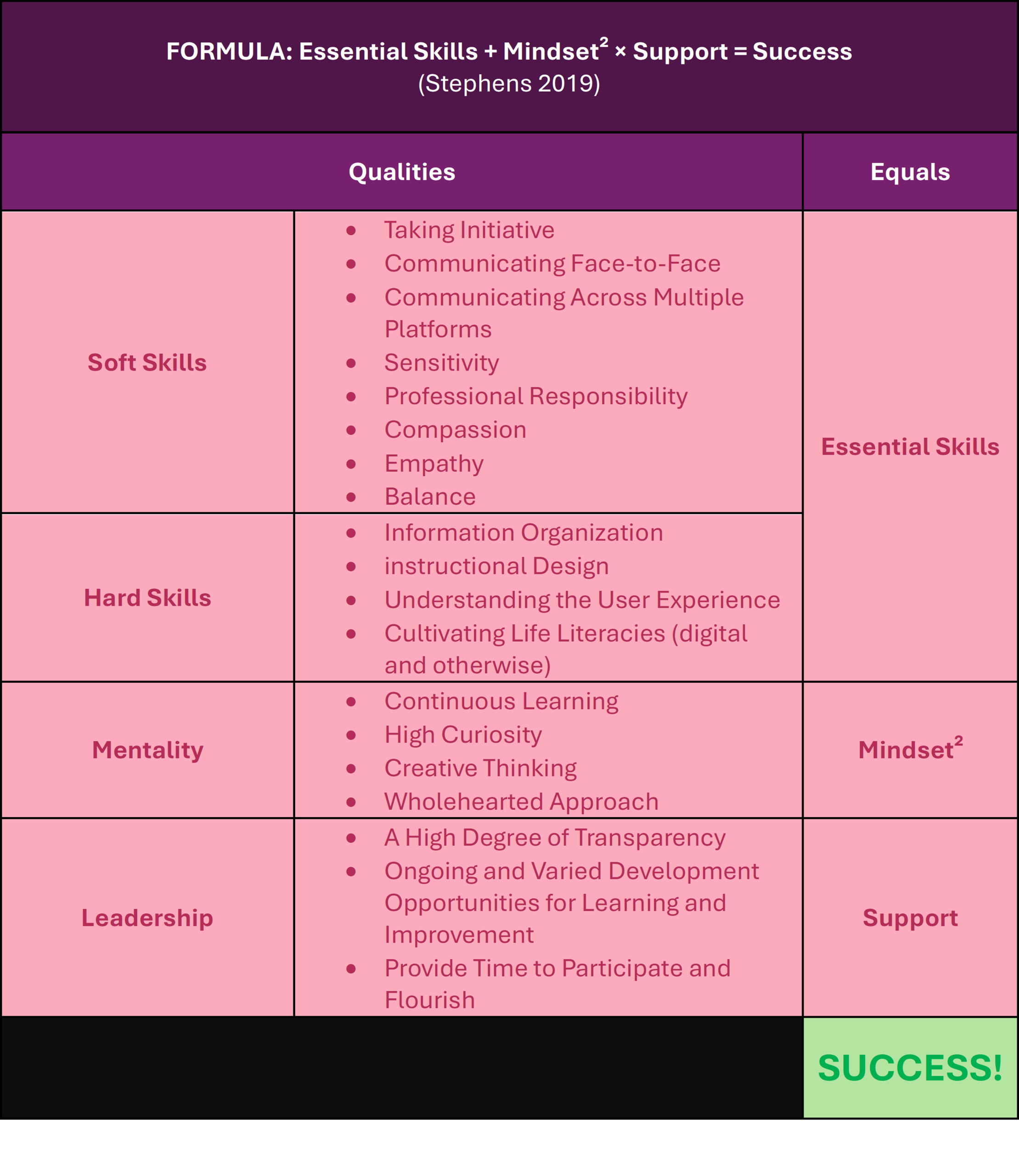
Stephens, M. T. (2019). Wholehearted librarianship: finding hope, inspiration, and balance. ALA Editions.

You May Also Like
Reflection on Hyperlinked Communities
Reflection on Hyperlinked Environments: Hyperlinked Museums, Galleries, and Archives