Reflection: New Models
I have shared in previous posts how my perception of the library was greatly enlarged and improved when I was given a tour of the National City Public Library. Dannielle Ghio is the head librarian at NCPL and she very kindly helped me explore the possibility of earning my MLIS degree and embracing this work – and as part of her generosity she gave me a tour and explained a lot of the interesting things going on at the library. Most novel to me was the “library of things” and their tool checkout program: U-Tool-ize program but they also have a Memory Lab. Technology is a requirement for participating in the San Jose State’s School of Information MLIS program. I am fortunate to come to the program in my adulthood, with a career using tech behind me. Not everyone is so lucky.
The course Module page introduced me to the Do Space in Oklahoma, and I can see how a program like that at every library would be a benefit – not only are the folks who are without access to a modern tech presence living in every community in this country, there are also elderly populations who never had the opportunity to develop tech skills. With the level to which today’s modern life is lived online – bill pay, banking, mobile payments – this kind of support is practically at the level of a “utility” – like electricity and water.
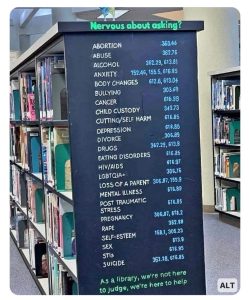
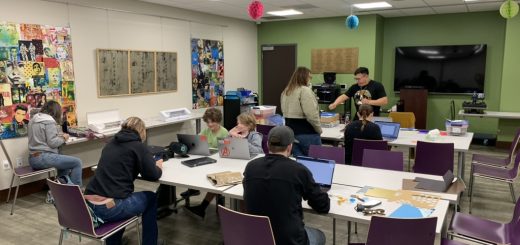
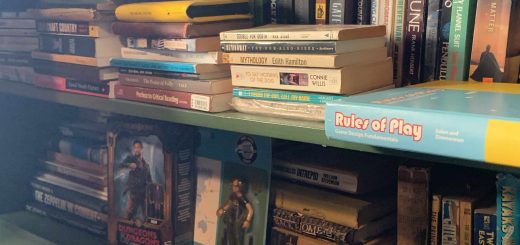
Public libraries now have creation and maker spaces, club meeting spaces, video game and board game collections and playing spaces (see my post on Boardgame librarianship), community gardens and kitchens. Shared work spaces, creative infrastructure – are public libraries now the new home of music education? Of art education? Perhaps that can and should be the case.
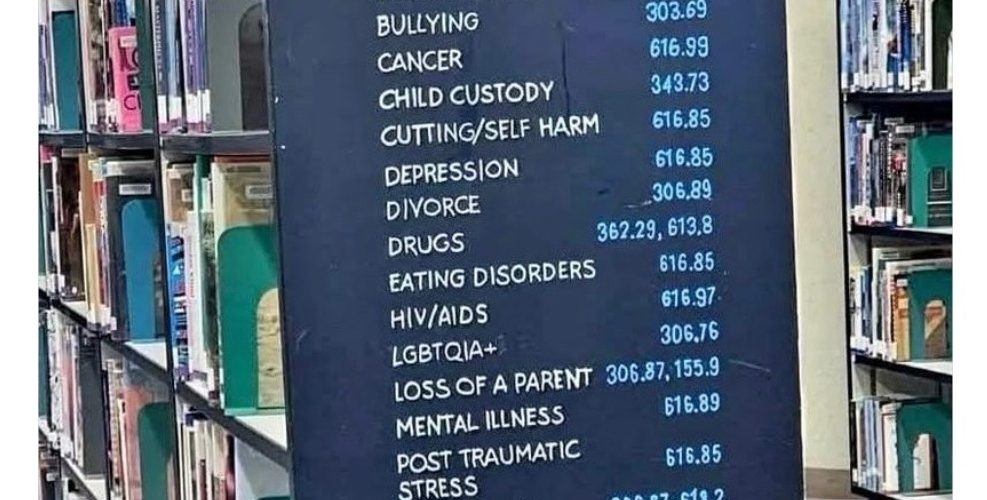
The modern European model of publicly supported and shared spaces is inspiring people and despite the challenge that the American government, society, and culture can present to the vision of humane fellowship in a welcoming library, there are wonderful people-centered initiatives driven by empathetic librarians and staff happening in the country today. As the linked Tom Scott video ends, the host points out that not all libraries have robots, but all have librarians – and that is what matters. Library staff change lives for the better.
When considering the question of new models – the “library train”, instagram delivered novels, community gardens, the embrace of hyperlinked communties – it seems to me that these programs are extensions of the model that libraries are built from: people, community, growth, learning. As Pam Sandlian highlights in her Ted Talk: John Cotton Dana said “the purpose of the public library is the pursuit of happiness first and education second.” Mathews’ 2012 paper “Think like a Startup” is helpful and positive, but in my mind highlights the fact that if we need to invent “new ways” to frame our relationship to libraries and our mission, then we have a foundational problem. The “new model” we really need to embrace is nothing less than the recentering of the mission’s importance in public life. George Bernard Shaw’s “Those who do, do, those who can’t, teach” and Allen’s corollary “those who can’t teach, teach gym” are two incredibly corrosive ideas. We need to elevate the importance and status of the human mission of the public library. I have no idea how that is achieved immediately, but the programs that this module describes, as well as the folks embodying them, are bringing us that future – they are in fact doing.